2026-09-16 · Dave Pelletier
How Ice Dams Lead to Skylight Leaks in Manchester Homes
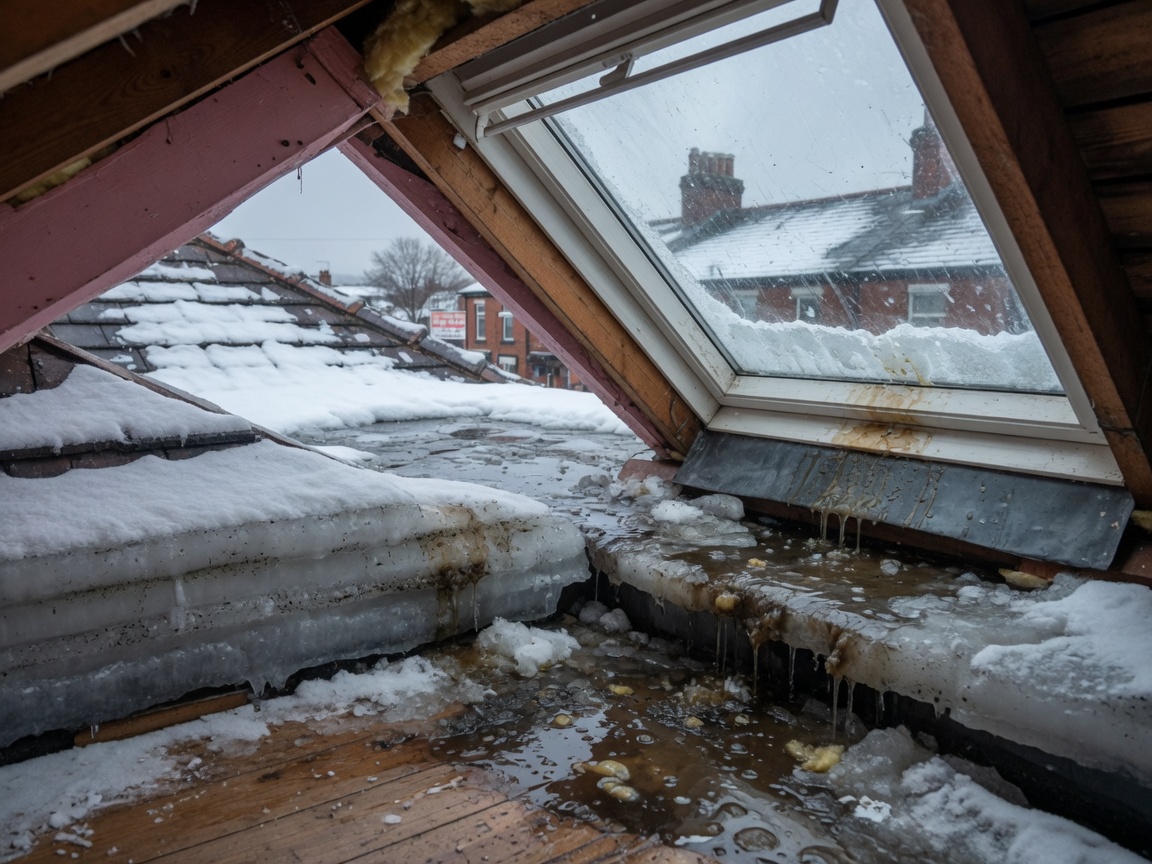
Ice dams cause skylight leaks in Manchester homes when melting snow refreezes at the eaves and backs water up under shingles, pushing it past the flashing around skylights during the thaw cycles typical of our humid continental winters.
How Ice Dams Form Along Manchester Roofs
Manchester's cold snowy winters bring repeated freeze-thaw cycles that turn roof edges into ice barriers. Snow on the warmer upper roof melts and runs down until it hits the colder eaves, where it refreezes into dams often 6 to 12 inches thick. Homes in neighborhoods like the West Side, Rimmon Heights, and Goffes Falls see this frequently because many older houses have steeper roof pitches and limited insulation that lets heat escape unevenly. The same pattern appears in the North End and South End where Victorian-era and early 20th-century stock dominates. Once the dam holds water, it finds every gap around skylights, especially where flashing has aged or sealant has dried out from summer UV exposure.
Why Skylights Become the Weak Point
Skylights sit higher on the roof plane than most penetrations, so water backed up by an ice dam pools directly against their curbs and flashing. In Manchester's older housing stock, many skylights installed 15 to 25 years ago use metal flashing that has corroded or separated at the seams. Water then travels under the shingles and enters the house along the interior frame or ceiling drywall. Homes near Amoskeag Falls and the Millyard often have complex rooflines with multiple skylights that create additional seams where ice pressure concentrates. The result is staining or dripping that appears days after the storm ends, once interior temperatures push the trapped moisture through.
Local Weather Patterns That Worsen the Problem
Hillsborough County winters deliver 60 to 80 inches of snow in a typical season, with January and February thaws arriving just often enough to create repeated ice-dam cycles. When daytime highs reach the mid-30s followed by overnight drops below 20°F, the dams grow thicker and the backup lasts longer. Manchester's location between Nashua and Concord means we also receive lake-effect moisture that adds to roof loads. These conditions hit homes in Bakersville and Hallsville particularly hard because many properties sit on slight slopes that direct meltwater toward the street-facing eaves where skylights are commonly placed.
Signs Ice Dams Are Affecting Your Skylight
Homeowners notice dark water stains along the skylight frame or ceiling first. In severe cases, actual drips appear during the next warm spell even when no precipitation falls. Check the exterior after a thaw for ice ridges along the lower roof edge; if they align with a skylight location, the connection is likely. Older homes in the East Side and Downtown often show this pattern because their original skylight installations used less robust flashing than current standards require. Regular winter inspections from the ground with binoculars can reveal lifted shingles or ice buildup before interior damage spreads.
Steps to Reduce Ice Dam Pressure on Skylights
Improve attic ventilation and insulation so roof surface temperatures stay closer to outdoor air, reducing meltwater production. Clear gutters and downspouts before the first snow so melt can drain freely rather than pool. For existing dams, avoid roof shoveling that risks damaging shingles; instead, use calcium chloride socks placed safely from the ground. When leaks have already started, targeted repairs to flashing and sealant stop the entry point without full replacement. Manchester homes in the Amoskeag Millyard area benefit from these steps because their dense roof configurations trap heat and accelerate the cycle.
When to Call for Professional Assessment
If stains appear or you see repeated ice buildup near skylights, schedule an inspection before the next heavy snow. Technicians can evaluate flashing condition and recommend whether sealant work or glass replacement will restore the seal. For homes in Hallsville or Rimmon Heights with multiple skylights, a full assessment often reveals patterns across the roof that one-time fixes miss. Addressing the issue early prevents ceiling repairs and mold growth that follow prolonged moisture exposure in our climate.